
ClickFix and the limits of interface evidence
What happened on the screen
An analyst receives a screenshot and a request to confirm that a workstation’s protection handled a ClickFix incident. The picture establishes that a page was visible. To answer the owner, the analyst must distinguish which observer could have captured each later development. A picture alone carries no evidence of endpoint activity or a protection decision. Microsoft’s published investigation drew on observations at different levels. In this module we build a narrower instrument. It decides whether a synthetic interface observation and an independent recorder receipt belong to the same run.
A training card displays a circle and a square. One source records presentation and shape selection. Another returns an identifier for a neutral marker. Both sources are fixtures. The observations contain no personal identities. Your deliverable is a function that explains which fields connect three records. If you have only two, preserve them and leave a visible gap for the third. The evidence available at review time often cannot distinguish a delayed delivery, an observation failure and an event that never happened.
Fields that determine the scope of an observation
A run identifies one execution of the model. A marker identifies a neutral token within it. Two groups are free to use the same colour for their respective tokens. A record identifies an individual row that you can retrieve after grouping. Source identifies the observer, while kind identifies what it observed. Finally, step gives an order within a single run and marker. Step ten in one run and step twenty in another establish no order between the two runs.
Temporarily cover the run column in the table. The first three rows look like a complete trip for the red marker. Uncover the column and check the receipt. The recorder observed RED during U2. The interface observed RED during a different run. Matching on colour alone yields a confirmation that neither observer supports. Losing one field during export is enough to change the answer.
record | run | marker | step | kind             | source
W1     | U1  | RED    |   10 | card_shown       | view
W2     | U1  | RED    |   20 | shape_selected   | view
W3     | U2  | RED    |   30 | marker_recorded  | recorder
W4     | U3  | GOLD   |   10 | card_shown       | view
W5     | U3  | GOLD   |   20 | shape_selected   | view
W6     | U3  | GOLD   |   30 | marker_recorded  | recorder
Turning a claim into a check
The function below is a first pass over previously validated fields. It shows which observations each source supplied. We will check order in the next module. An earlier draft kept only the event kind in a set. If a view mistakenly supplied its own receipt, that draft passed the case. The contract now requires a pair. A component can put another component’s event name in a row, but its assigned observer remains visible. The provenance of that observer is an assumption of the fixture. A deployed system needs separate evidence of how source identities are assigned.
Walk through a small test before implementing anything. Collect the three pairs for U3 and compare them with the constant. In a copy of W6 change only the source to view. The recorder pair is now missing even though the event kind is still spelled correctly. Write a sentence naming the exact column your colleague should inspect in the original report.
EXPECTED = {("view", "card_shown"), ("view", "shape_selected"),
            ("recorder", "marker_recorded")}

def missing_observations(rows, run, marker):
    seen = {(row.source, row.kind) for row in rows
            if (row.run, row.marker) == (run, marker)}
    return EXPECTED - seen
Exercise
Read the project’s fixture as text first. List every run and marker pair and count the distinct observers in each. Convert the rows to Event objects and apply missing_observations. Compare an empty remainder with the result of confirmed_receipts in the project. Identify the function that can reject an invalid source. If the first function sees three expected pairs plus an unexpected event, it still reports nothing missing. That is an appropriate answer to its narrow diagnostic question. Input acceptance requires another check.
For a second experiment create a new run with only a recorder receipt. Describe two explanations for missing interface observations. Allow ordinary delivery delay in one and an incomplete export in the other. Choose an additional observation that could discriminate between them. A later export preserving receipt time, for instance, can establish whether the other rows existed after the initial cutoff. It cannot reconstruct a row the observer never wrote.
Submit a three-column table containing a claim, supporting record IDs and the question still open. State the independent receipt claim specifically for a training marker. In an adjacent row keep the question of workstation activity open; none of the evidence types in this exercise captures workstation actions. A reviewer should be able to reproduce both decisions from the table and obtain the same missing pairs without relying on your interpretation of a screenshot.
References
The investigation uses observations from several levels. The specification defines a source and an identity convention for events. Microsoft Security · CloudEvents 1.0.2
Test your conclusion
What do the records in this ClickFix reconstruction establish?
Interface
run=N4 card_shown; shape_selected
run=N5 card_shown
Recorder
run=N5 marker_recorded
coverage N4=unknown
Insufficient evidence. Temporal proximity cannot join two runs. The reconstructed event would have no basis in the input.
Supported. Record the selection and request recorder coverage for N4. The N5 receipt belongs to a separate run.
Independent exercise
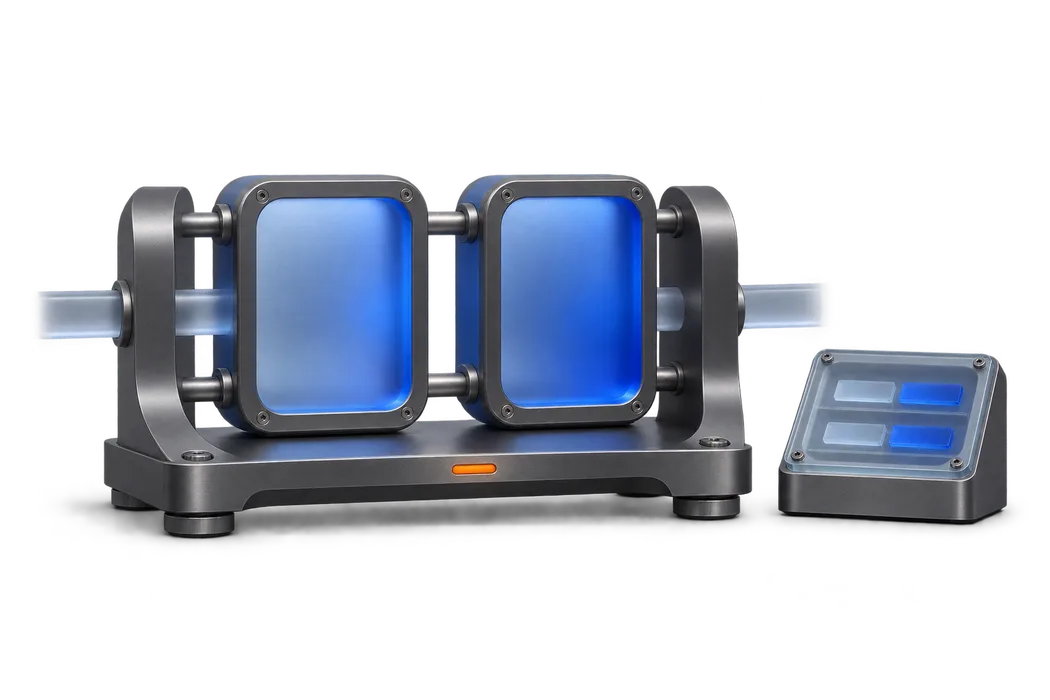
The simulator shows a shape, records a selection and issues a neutral observation to a separate recorder. All identities are synthetic.
Evidence
record | run | marker | step | source   | kind
V1     | AX  | T1     | 1    | view     | card_shown
V2     | AX  | T1     | 2    | view     | shape_selected
K1     | BZ  | T1     | 3    | recorder | marker_recorded
V5     | BY  | T2     | 1    | view     | card_shown
V6     | BY  | T2     | 2    | view     | shape_selected
K8     | BY  | T2     | 3    | recorder | marker_recorded
Assignment
Name the receipt for the complete run and the evidence missing for AX.
Compare your reasoning
K8 completes BY/T2. AX has two interface observations. K1 belongs to BZ even though it shares the T1 label.
Personal practice environment
Check an excerpt, find matching lines and compute the SHA-256 of the original text. Temporary data expires after 30 minutes or when you close the environment.
Sign in