
Collection and Chain of Custody
Chain of custody links an examination object to its source and records who handled it, when and how. Build an evidence register distinguishing the original image, working copy and redacted export. A hash verifies the integrity of compared bytes; it does not replace authority, provenance or a documented acquisition history.
Lesson 1. Source, authority and integrity
Acquisition begins with authorization, case boundaries and source identification. Record device details, serial number, state, time, collector and tool version and settings. For static disk collection, prevent writes to the source where feasible and verify the selected write blocker. Live collection changes the running system; document those effects rather than claiming absolute immutability. Assign the image an identifier and hash and preserve the original separately from working copies. Transfers record sender, recipient, time, location and access controls. Matching SHA-256 values for E1 and E2 help verify copying, but do not prove that E1 came from the stated disk or that acquisition was complete. Derivative materials, especially redacted ones, need their own identifiers and hashes. NIST guidance is not Russian procedural law. Applicable documentation requirements depend on organizational role, examination purpose and the current governing process; a training register is not an automatic admissibility guarantee.
Lesson 2. Read the E1–E3 chain
The disk and identifiers are synthetic. The hash is a training-register example. No actual disk contents need to be downloaded or acquired to complete this evidence-management exercise.
case=DF-17 authority=approved training-device acquisition
E1 source=lab-disk serial=LAB017 collected=2026-10-06T10:00Z collector=analyst-A
E1 image=lab017.raw bytes=1048576 write_blocker=WB-LAB verified=yes
sha256(E1)=8f14e45fceea167a5a36dedd4bea2543a24de951d203aa2c579c6f94915dd4721
transfer 10:20Z from=analyst-A to=evidence-store seal=S17
E2 working-copy parent=E1 sha256=8f14e45fceea167a5a36dedd4bea2543a24de951d203aa2c579c6f94915dd4721
E3 redacted-export parent=E2 hash=not-yet-recorded
clock: collection workstation UTC, synchronization recorded
Lesson 3. Create a reproducible derivative
E1 is linked to an approved source with a recorded size and blocker check. E2 shares its hash, allowing the stated copy to be verified through byte fingerprints. E3 is a different object: redaction changes contents, so E1’s hash cannot serve as E3’s hash. Close the missing-hash gap before transferring the export. An analyst receiving only E3 can verify that export’s integrity but cannot independently repeat every analysis of the original. Preserve parent linkage, a description of removed fields and controlled E1 access without publishing unnecessary personal information.
Operational workflow and common errors
Ask whether equal E1 and E2 hashes establish who supplied the original disk. They do not. They support correspondence of acquired bytes; authority and provenance are recorded separately. If a source was substituted before the first hash, later matching hashes cannot undo that substitution.
Step 1: object profile. Record DF-17, acquisition authority, LAB017 source, method, size, zoned timestamp, collector and storage conditions. For disks distinguish complete media, partition and logical export. For cloud sources record tenant, query scope, export identifier and filter settings instead of a physical serial. Our disk write blocker does not transfer automatically to a cloud API.
Step 2: separate preservation and work. E1 is the acquired image; E2 is a working copy linked by parent=E1. Compare algorithm, byte count and hash before analyzing E2. Read-only access reduces alteration risk but does not replace the activity log. If a tool creates an adjacent index or cache, record it separately; this does not necessarily modify original data.
Step 3: register the derivative. E3 is a redacted export and should not reuse E1’s hash. Preserve removed-field rules, program version, transformation time and its new hash. The not-yet-recorded field indicates incomplete verification. Filling it with the parent hash is an error. Use E3 for public access and maintain the relationship to restricted originals.
Local test with fictional data. In your own DFIR-Lab folder create note.txt containing “Training record A”. Copy it to note-copy.txt and compare SHA-256 values. PowerShell supports Get-FileHash .\note.txt -Algorithm SHA256; macOS provides shasum -a 256 note.txt; Linux provides sha256sum note.txt. Run from your training folder and repeat for the copy. If commands are unfamiliar, skip local hashing and verify the E1/E2 register using the supplied values.
A command is a textual instruction to a program; a terminal is a window for entering it. Find PowerShell through Windows Start, Terminal through macOS application search, or Terminal in the Linux application list. To enter the training folder, type cd, a space and the complete quoted DFIR-Lab path, then Enter. On macOS you can drag the Finder folder after cd to insert its path. If it is not found, stop and check its location in the file manager. Your own training files require no administrator rights.
Edit only note-copy.txt by adding “Reviewed”. Its new hash should differ while the original remains unchanged. This demonstrates byte-integrity checking, not forensic media acquisition. Do not classify the toy file as a physical disk image. Preserve two register entries with parent, algorithm and outcome.
Finally record each transfer: sender, recipient, time, condition, integrity check and storage location. Seal S17 helps track physical movement but does not independently verify content. In Russia, procedural formalities depend on the proceeding and participant authority. NIST and this log support technical reproducibility; neither guarantees court admissibility. Retain this limitation so an otherwise correct hash experiment does not become an unsupported legal promise.
Practice. Lesson 4. Verify copying with a training file
Complete E3 with creation time, creator, hash and redaction purpose. Draft a working-copy handoff to analyst-B and identify the information needed to recognize the object. Add a Linux live-collection case, listing unavoidable changes that must be documented and the result-storage procedure. Do not attach or acquire actual devices without authority.
Lesson 5. Check transfers and limitations
Distinguish originals, working copies and exports. Derivatives have their own integrity controls and parent links. A single hash does not replace transfer history. Record authority, tooling, timestamps and live-acquisition limitations. Do not present this training procedure as a universal legal guarantee that evidence will be admitted.
Primary sources
A changed file has a changed fingerprint
Change the conditions and observe this training model. It runs in your browser and does not change your computer.
The original synthetic record is on the left and its working copy on the right. Change 3 to 4 and calculate SHA-256. Calculation happens locally in your browser; nothing is sent.
TRAIN-001|export=3
Choose conditions above to see an explanation of the result.
Independent exercise · Russian
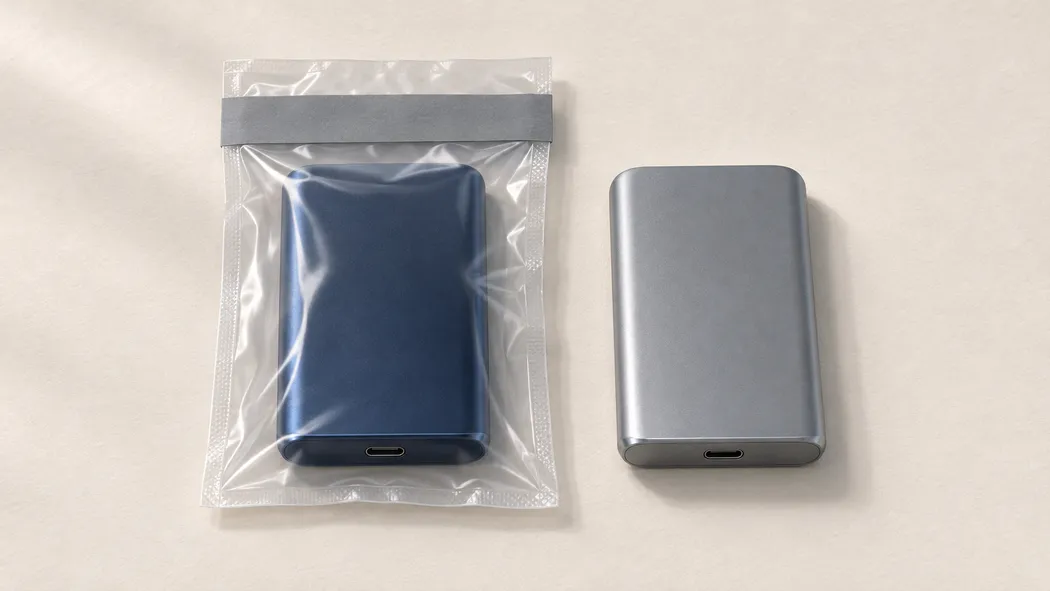
26 ноября 2026 года склад в Твери передал архив сменных заданий на внутреннюю проверку. Утром аналитик нашёл в сейфе два одинаковых серых накопителя. Нужно решить, какой материал можно брать в работу и как объяснить перерыв в учёте.
Evidence
Карточка К-18 фиксирует упаковку носителя S-041 под пломбу П-73 в 18:20 МСК. На приёмке в 19:05 указаны S-041, целая П-73 и получатель. Для S-042 есть только запись «копия, оставили вечером». Контрольная сумма архива на S-041 внесена при упаковке.
Assignment
Подготовьте две строки реестра. Для каждой укажите последнее подтверждённое действие, основание для дальнейшей работы и первую проверку при вскрытии или уточнении происхождения.
Compare your reasoning
У К-18 прослеживается передача от упаковки до сейфа. Оформите вскрытие, сверьте номер носителя и контрольную сумму архива, зарегистрируйте отдельную рабочую копию. S-042 учитывайте отдельно с неизвестным происхождением и запросите запись о копировании. Совпадение будущих хешей свяжет содержимое файлов, но не установит, кто принёс второй диск.
Personal practice environment
Check an excerpt, find matching lines and compute the SHA-256 of the original text. Temporary data expires after 30 minutes or when you close the environment.
Sign in